Smart environments aren’t just emerging, they’re accelerating. As digital transformation spreads beyond screens into the infrastructure of space itself, IoT and sensor technologies are taking centre stage. These tools are enabling more responsive, data-led, and efficient environments across sectors like transport, healthcare, industrial facilities, and smart cities.
Here are 12 trends set to define smart spaces in 2026, and why forward-thinking organisations are investing now.
1. Edge Analytics Gains Ground
With the explosion of sensor data, organisations are pushing analysis closer to the source. Edge analytics enables real-time insights and immediate responses without relying on cloud latency. Gartner predicts that by 2026, 65% of enterprise data will be created and processed outside the cloud.
2. Demand for LoRaWAN and Low-Power Networks
Low-power wide-area networks (LPWANs) are driving scale in smart environments. LoRaWAN, NB-IoT, and LTE-M are now essential for connecting thousands of devices affordably and efficiently across large facilities. Forrester anticipates 30% CAGR growth in LPWAN deployments through 2027.
3. Environmental Monitoring as Standard
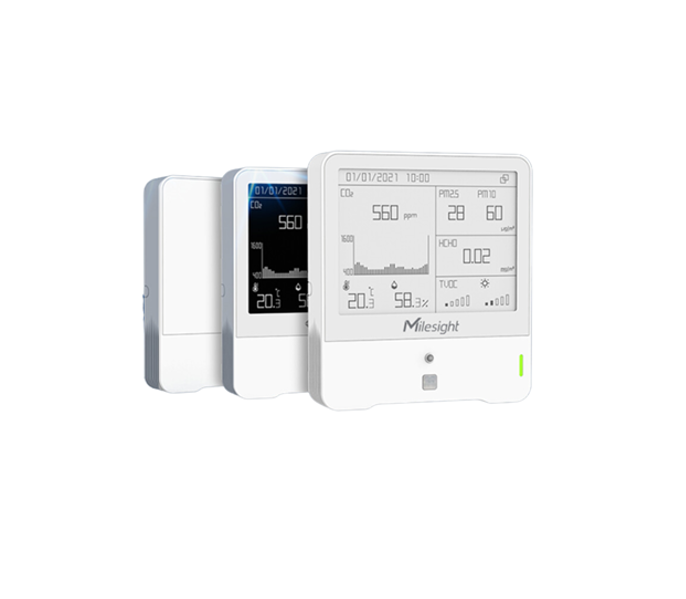
From CO2 levels to ambient light, temperature and humidity, environmental monitoring is now foundational, not optional. It supports sustainability targets, health compliance, and optimised building operations. Real-time air quality alerts alone have reduced workplace absenteeism by up to 18%, according to the World Green Building Council.
4. Predictive Maintenance at Scale
Sensors are enabling predictive maintenance that cuts downtime and repair costs. By tracking vibration, power usage, and temperature, systems can alert teams before failures happen. A McKinsey report shows predictive maintenance can reduce machine downtime by up to 50%.
5. Smart Waste and Utilities Management
IoT is transforming utilities. From smart bins that trigger pick-ups to meters that optimise water and energy use, expect infrastructure to get leaner, cleaner, and more efficient. Smart city pilots have reported cost savings of 20–30% on waste collection routes.
6. Smarter Space Utilisation
Sensor data is driving decisions around layout, leasing, and energy usage. In commercial buildings and public infrastructure, occupancy sensors are helping reduce unused space and lower energy bills by up to 25%. Systems like SmartSpace provide real-time visibility into how environments are used, enabling more informed decisions about everything from cleaning schedules to workspace allocation. These insights are critical for facilities managers looking to optimise operations and align with sustainability targets.
7. Cross-System Integration
Sensors can’t sit in silos. The shift is toward unified platforms that integrate HVAC, lighting, security, and environmental systems into one dashboard. Open APIs and cloud-native architecture are making integration easier and more powerful.
8. Infrastructure Insights for Transport and Transit
Transport hubs and road networks are embedding sensors to monitor usage, detect faults, and optimise flow. Smart traffic systems and environmental sensors are reducing congestion, lowering emissions, and supporting safer cities.
9. Sensor-Driven Accessibility and Inclusion
IoT is enabling smarter spaces for everyone. From wayfinding tools to reactive lighting for neurodiverse users, smart tech is personalising environments in inclusive ways. The global assistive tech market is expected to reach $31.6 billion by 2026.
10. Real-Time Alerts for Rapid Response
Whether it’s a freezer fault in a hospital or a pipe leak in a public building, real-time alerts can prevent disruption and reduce operational risk. Instant SMS or app-based notifications are becoming standard protocol across facilities.
11. Sustainability Reporting from the Ground Up
IoT data feeds sustainability dashboards. Live energy use, water metrics, and occupancy analytics are making ESG reporting more accurate, defensible, and actionable. The EU’s new CSRD regulations will only intensify demand for robust environmental data.
12. Modular, Scalable Installations
As demand grows, so does the need for simple, repeatable deployments. Plug-and-play sensor kits and scalable dashboards are helping municipalities, institutions, and enterprises get started faster, without needing an army of engineers.
Smart infrastructure is no longer an upgrade, it’s a business imperative. As environments get more intelligent, the demand for scalable, sensor-led solutions will define who leads and who lags.