
High-Brightness Wayfinding Displays for Network Rail
Long-Life Displays Engineered for Critical Infrastructure

Business Challenges
Long-term brightness performance requirements.
Serviceability of large-format displays.
Reliability in critical environments.

Keys to Success
Controlled LED brightness management.
Integrated diagnostics and sensors.
Serviceable cassette design.

Results
Sustained brightness over lifecycle.
Simplified maintenance and access.
Reduced operational risk.
Our client required a high-performance display solution for a Network Rail wayfinding project, centred around a large-format 85.6″ LCD cassette. The application demanded consistent brightness above 800 nits over a 7 to 10 year lifecycle, alongside reliable operation in a critical public infrastructure environment. Key challenges included managing long-term LED backlight degradation, ensuring effective thermal control, and enabling straightforward servicing of a large and complex display unit. The system also required integrated diagnostics to support monitoring and reduce operational risk over time. Hubit Displays supported the project by supplying a solution designed around longevity, performance stability, and serviceability, with a focus on maintaining consistent visual output while enabling practical access and maintenance within the installed environment.
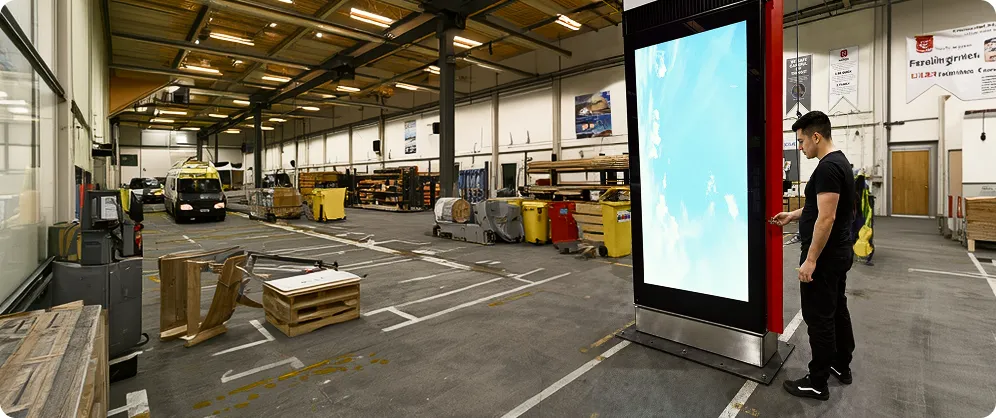
The solution utilised a high-brightness panel operated below maximum output, allowing brightness to be increased over time to maintain consistent performance throughout its lifecycle. Thermal design reduced LED junction temperatures to support longevity, while integrated diagnostics including front-facing light sensors and serial control enabled ongoing monitoring and validation. A serviceable cassette design with lifting points simplified panel access and replacement when required. Our client has been a valued, long-standing partner of Hubit, and this project reflects the depth of a collaborative relationship built on delivering technically precise display solutions for some of the UK’s most demanding infrastructure environments.
Similar Case Studies